
Education

Open to the world; deepened for members.

A systematic programme of webinars, lectures and structured courses. Roughly half is open access, free to every professional worldwide. The remainder is unlocked through your national society.

Open access, free to all

Lectures and webinars open to every professional worldwide, with a particular commitment to developing regions. A certificate of completion is issued for designated activities.

Member societies: society-issued access

Structured curricula, assessed courses and the full congress session archive, unlocked through membership of your national society: one route in, wherever you practise.

How the Hub is organised

Two tiers, found two ways.

Levels 1 and 2 are open and free to every professional; advanced and fellowship courses are issued through your national society. Within that, the library is browsed by audience and by modality, and in the full Hub also by specialty and speaker.

By audience

  • Doctors and physicians
  • Technologists
  • Allied specialists (physicists, radiopharmacists)

By modality

  • Conventional nuclear medicine
  • PET / CT
  • PET / MRI
  • Therapy
100+WebinarsLive and recorded, open and advanced
CoursesStructured coursesAssessed sequences across levels
ArchiveCongress archiveSession PDFs and PowerPoint
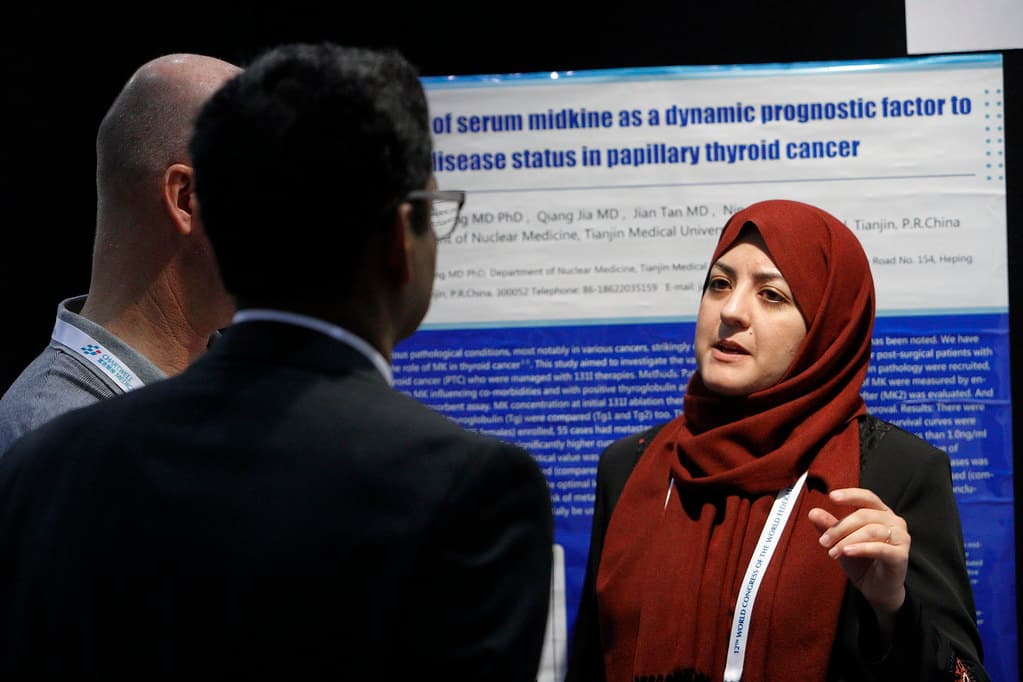
A researcher presenting her scientific poster to two delegates at the World Congress.

The programme

Three strands, one library.

Teaching arrives live, in sequence, or from the congress floor, and all of it ends up in the same place, catalogued and searchable.

Live webinars

Sessions given by practitioners from the member societies, scheduled across time zones so no region is permanently in the middle of the night. Recorded, then added to the library.

Structured courses

Sequences rather than single lectures: a subject taken from first principles through to practice, with the option of an assessment at the end.

The congress archive

Sessions from the World Congress, recorded and kept. Selected plenaries open to everyone; the full record through your national society.

Certificates

What a certificate says.

Medical students in white coats reviewing notes together in a hospital corridor.

Designated activities issue a certificate of completion: a record that a named person completed a named activity on a given date, verifiable from a public address so an employer or a society can check it.

It is not a continuing-education credit and does not claim accreditation. Where credit is recognised, that recognition comes from a national society or an accrediting body, not from this platform. If the Federation secures accreditation, the certificate will say so, and not before.

Journals & Publishing

Where the field publishes.

The Federation signposts these; submission and publication are handled by the respective publishers.

Calls for papers

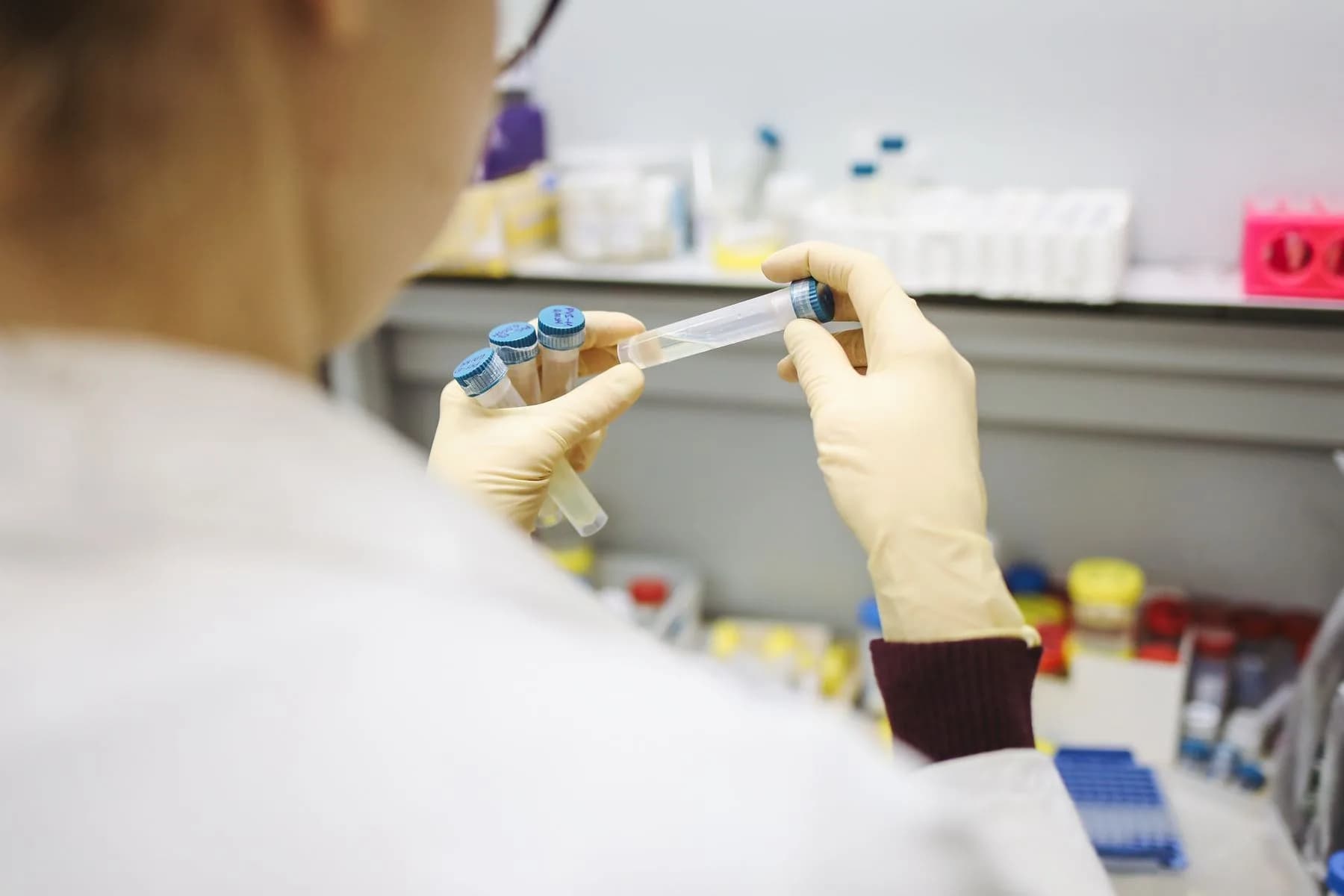
A researcher in gloves examining labelled sample vials of a radioligand preparation at a laboratory bench.

Scientific Reports (Nature Portfolio) Collection

Call for Papers: Targeted Radiopharmaceuticals

Deadline

Scientific Reports has opened a Collection on targeted radiopharmaceuticals, inviting research into their development and use in preclinical models and clinical studies. Radioligands have advanced diagnostic imaging and therapy across cancer, Alzheimer’s disease and other conditions; coupling them to peptides, antibodies or small molecules for precision targeting can improve efficacy, reduce side effects and open theragnostic options.

The Collection is recognised for its contribution to UN Sustainable Development Goal 3.

Guest editors

  • Kalevi Kairemo — Docrates Cancer Center, Finland
  • Kitiwat Khamwan — Chulalongkorn University, Thailand
  • Kel Vin Tan — Perceptive Inc, United Kingdom
  • Anzhelika Vorobyeva — Uppsala University, Sweden
View the Collection and submit (opens in a new tab)

Recommended journals

In collaboration with WARMTH

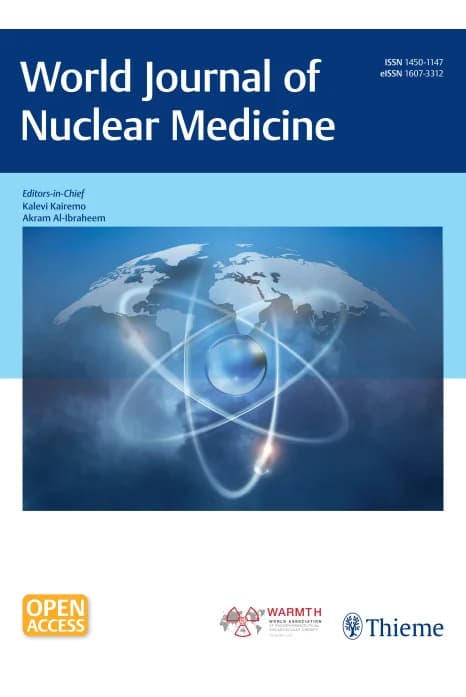
World Journal of Nuclear Medicine (WJNM)

A quarterly, peer-reviewed international journal published in collaboration with the World Association of Radiopharmaceutical and Molecular Therapy (WARMTH), promoting radionuclide molecular therapy and theragnostics worldwide, with a focus on supporting education and access in developing countries. Welcomes original research, reviews, case studies, short communications and editorials across nuclear medicine, molecular imaging, radionuclide therapy and related fields.

  • Open access (CC BY)
  • No author charges
  • Quarterly
  • Impact Factor 1.0 (2025, per the publisher)
Publish with WJNM (opens in a new tab)

Open-access partners

Where else the field learns, in the open.

Alongside the Hub, the Federation points to established open-access platforms from partner organisations. Each opens on its own site; the material stays with its source.

IAEA — Atoms for Peace and Development

IAEA education platform

The IAEA’s NUCLEUS information resource portal provides access to over 100 scientific, technical and regulatory resources — databases, applications, publications and training material. For health professionals working in nuclear medicine, radiation oncology and medical physics, the “Nuclear Medicine & Radiology” section is designed to serve as an informative resource, giving insight into different aspects of modern clinical practice.

  • Nuclear Medicine & Radiology
  • 100+ resources
  • Free to access
Visit IAEA (opens in a new tab)

RLT Angels — open-source material

RLT Angels open-source material

The RLT Angels initiative carries the mission to improve the experience and availability of radioligand imaging (RLI) and radioligand therapies (RLT). Drawing on world-leading expertise, RLT Angels provides open-source best-practice resources — such as global blueprints and tools for process optimisation — to support healthcare providers.

  • Radioligand imaging & therapy
  • Open-source blueprints
  • Process optimisation
Visit RLT Angels (opens in a new tab)

The Education Hub

The Education Hub is open now: recorded lectures, webinars and resources, free to every professional worldwide and browsable by subject — no login required. Member accounts and society-issued access to advanced, assessed courses join it in a later phase; when they do, it is one login for the whole platform, and no material moves to a different address.

The education programme is directed by the Education Committee, which sets the curriculum with the member societies and holds a standing brief for developing regions. Proposals for sessions and courses reach the Committee through your national society.